
Lithium Grease
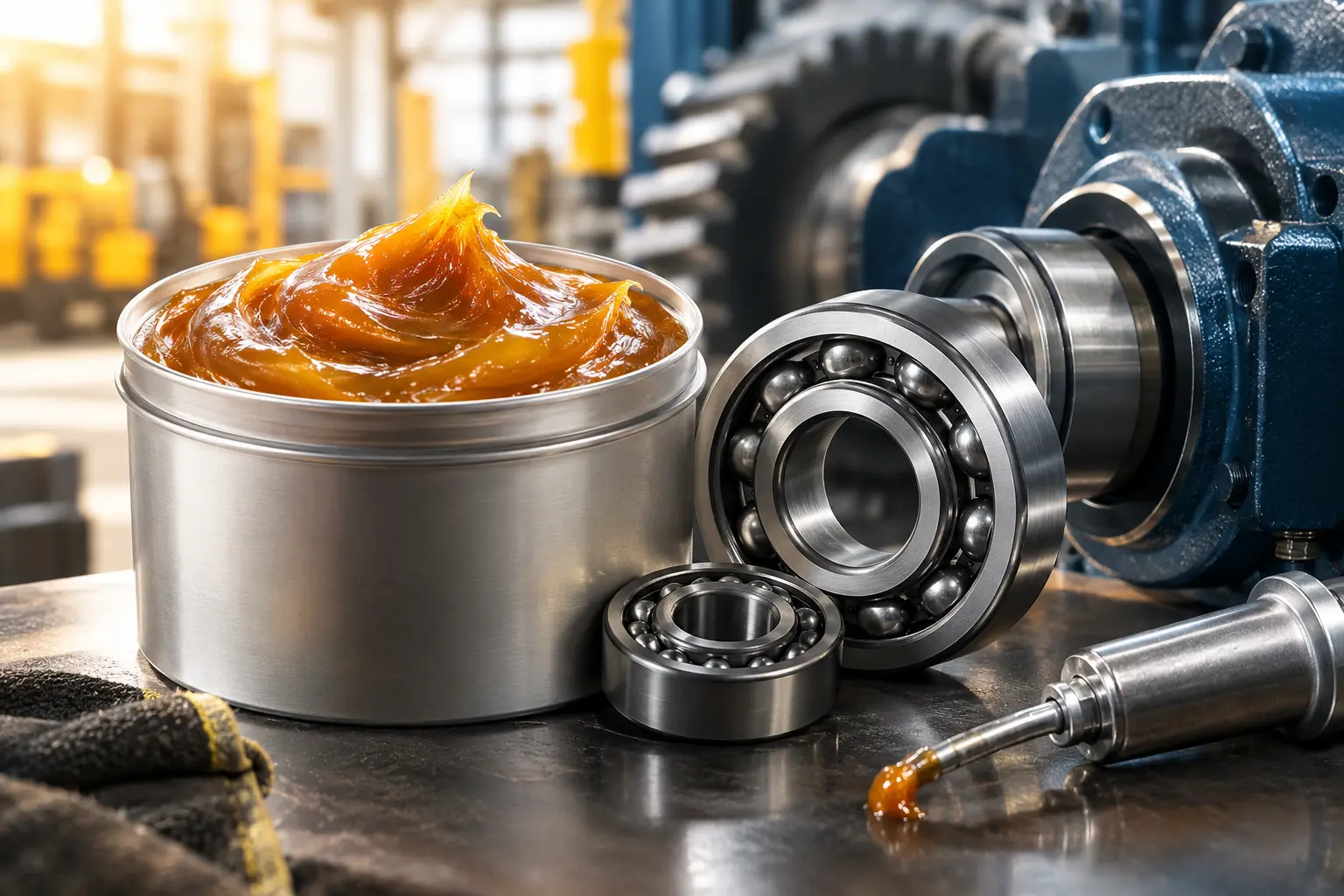
Lithium Grease
Lithium grease is one of the most widely used lubricants in various industries. It is used to reduce friction, prevent wear, and protect mechanical components under different operating conditions. Due to its suitable structure, good stability, and versatility, lithium grease has an important role in industrial lubrication. Lithium grease is generally produced by combining base oil, a thickener, and additives, while its semi-solid structure allows the lubricant to remain in the required location.
Compared with lubricating oils, grease can provide better performance in locations where oil may leak or drip. For this reason, grease is commonly used for bearings, bushings, joints, and various mechanical components and equipment.
What Is Lithium Grease?
Lithium grease is a semi-solid lubricant that uses lithium soap as its thickening agent. Mineral base oil forms the main lubricating component of this product. The thickener creates the semi-solid structure of the grease and helps the lubricant remain in place after application to the component.
One of the important characteristics of lithium grease is its balanced combination of lubrication performance, mechanical stability, and resistance to environmental conditions. These properties have made lithium grease suitable for a wide range of general and industrial applications.
Main Components of Lithium Grease
Grease consists of three main components: base oil, thickener, and additives. In the product under consideration, the base oil is mineral oil and the thickener is lithium soap.
The base oil provides the primary lubrication of moving surfaces. The thickener creates the structure of the grease and helps keep the base oil at the application point. In addition to these two components, additives may be incorporated into the formulation to improve properties such as oxidation resistance, corrosion protection, pressure resistance, and wear protection.
Technical Specifications of Lithium Grease
The technical specifications of grease are among the most important criteria for selecting a suitable lubricant. According to the technical information for this product, the lithium grease has an amber to brown color, lithium soap as its thickener, and mineral oil as its base oil.
This product has an NLGI grade of 3. The NLGI grade indicates the consistency or stiffness of grease and is important when selecting grease suitable for a specific piece of equipment. Greases with higher grades have greater consistency and may be suitable for applications where longer lubricant retention at the application point is required.
The dropping point of this grease is specified as a minimum of 180°C. The dropping point is an important parameter for evaluating grease behavior as temperature increases.
The worked penetration of the product is in the range of 220–250 and is measured according to ASTM D217. The flash point of the grease is also above 180°C and is determined according to ASTM D92.
| No. | Test Parameter | Value | Test Method |
|---|---|---|---|
| 1 | Color | Amber / Brown | Visual |
| 2 | Thickener Type | Lithium Soap | - |
| 3 | Base Oil Type | Mineral Oil | - |
| 4 | NLGI Grade | 3 | - |
| 5 | Dropping Point | ≥ 180°C | ASTM D2265 |
| 6 | Worked Penetration | 220 – 250 | ASTM D217 |
| 7 | Flash Point | +180°C | ASTM D92 |
Applications of Lithium Grease
Lithium grease is used in various industrial and mechanical equipment due to its structure and technical properties. One of its common applications is the lubrication of bearings and bushings. In these applications, maintaining a stable layer of lubricant can help reduce friction between surfaces and control wear.
Lithium grease can also be used in bushings, mechanical joints, moving shafts, and certain industrial assemblies where long-lasting lubrication is required. The appropriate grease grade should be selected based on the type of equipment, operating speed, temperature, pressure, and environmental conditions.
In environments where the lubricant may come into contact with dust, moisture, or other contaminants, proper use of grease can help provide better protection for moving surfaces. However, the resistance of each product to water, pressure, temperature, and other factors should be evaluated according to the technical specifications and formulation of that specific product.
Importance of Selecting the Right Grease
Grease selection should not be based solely on its name or thickener type. Parameters such as NLGI grade, base oil type, operating temperature, component speed, applied pressure, and environmental conditions are important when selecting the appropriate lubricant.
For example, using grease with an unsuitable consistency can result in improper equipment performance. Therefore, before use, the technical specifications of the grease should be compared with the equipment manufacturer's recommendations and operating conditions.
Cleanliness at the lubrication point is also very important during grease application. The presence of dust or foreign materials in the grease can reduce lubrication performance and increase component wear.
Karen Palayesh Pishran Novin Lithium Grease
Karen Palayesh Pishran Novin operates in the field of manufacturing and supplying products related to lubricants and petroleum products. Providing industrial products with defined technical specifications is an important part of this field. Lithium grease with lithium soap thickener and mineral base oil is one of the products that can be considered for a wide range of lubrication applications.
Defined technical specifications for parameters such as NLGI grade, worked penetration, and dropping point allow the product to be evaluated according to equipment requirements and operating conditions. When selecting lithium grease, paying attention to the product's technical specifications and matching them with the equipment manufacturer's recommendations plays an important role in ensuring proper lubrication system performance.
Test Standards for Lithium Grease
Standardized tests play an important role in evaluating the physical properties of grease. For example, the worked penetration of this product is determined according to ASTM D217. This test is used to evaluate the consistency and penetration characteristics of grease.
The dropping point can also be evaluated according to ASTM D2265, while the flash point is determined according to ASTM D92. Using standardized test methods allows the technical specifications of the product to be presented according to defined and comparable criteria, helping consumers make a more accurate selection based on the intended application.